
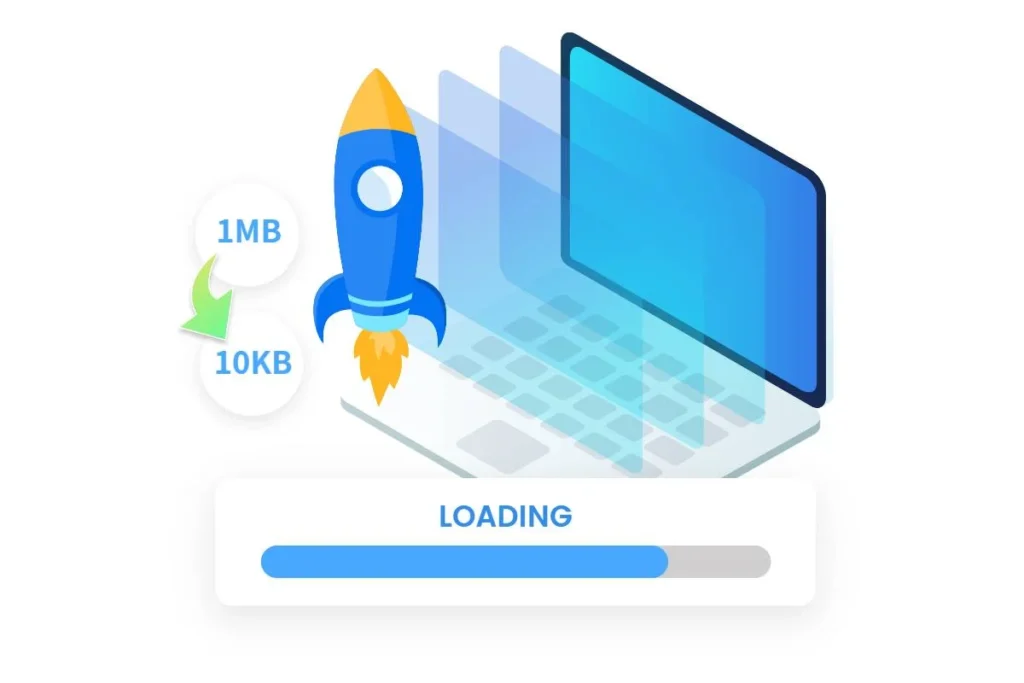
Reduce Image Size
Image compression reduces image file size by removing redundant or imperceptible data, balancing quality and efficiency for storage and transmission. It is essential for web performance, mobile optimization, and user experience.
1. Types of Compression
Lossy Compression: Permanently discards less critical data (e.g., subtle color variations). Ideal for photographs where minor quality loss is acceptable. Formats: JPEG, WebP, HEIF 16.
Lossless Compression: Preserves all original data. Best for graphics, logos, or medical imaging. Formats: PNG, GIF, BMP 27.
Table: Compression Types Comparison
Type Compression Ratio Best For Limitations
Lossy 10:1 to 20:1 Photos, web images Artifacts at high compression
Lossless 2:1 to 4:1 Text, graphics, transparency Larger files than lossy
2. Key Algorithms & Techniques
Discrete Cosine Transform (DCT): Used in JPEG to convert image blocks into frequency components, discarding high-frequency data 15.
Huffman Coding: Lossless entropy encoding that assigns shorter codes to frequent pixel patterns (e.g., in PNG) 59.
Chroma Subsampling: Exploits human insensitivity to color changes (vs. brightness) by reducing color data (e.g., 4:2:0 in JPEG) 16.
Wavelet Transforms: Modern method (e.g., JPEG 2000) offering better scalability and fewer artifacts than DCT 59.
3. File Format Guidelines
Choose formats based on content:
JPEG: Photos with gradients (e.g., landscapes). Avoid for text/high-contrast images due to artifacting 17.
PNG: Graphics with transparency, logos, or sharp edges. Larger files but lossless 18.
WebP/AVIF: Next-gen formats for 30% smaller files than JPEG/PNG. Support lossy/lossless compression and animation 68.
GIF: Simple animations. Limited to 256 colors; avoid for photos 17.
4. Best Practices for Optimization
Resize Images: Scale to display dimensions (e.g., avoid 5000px images for 300px thumbnails) 8.
Strip Metadata: Remove EXIF data (e.g., camera details) to save 10-20% file size 8.
Use Progressive Loading: Load low-resolution previews first (e.g., progressive JPEG) 6.
Automate with CDNs: Tools like Cloudflare or imgix convert formats (e.g., to WebP) and compress dynamically 68.
5. Impact on Web Performance
Faster Loading: Compressed images reduce page weight (e.g., Shinola’s 50% reduction boosted load times by 1 second) 8.
SEO Benefits: Google prioritizes fast sites; optimized images improve Core Web Vitals (e.g., Largest Contentful Paint) 78.
Bandwidth Savings: Critical for mobile users and high-traffic sites 6.